Future of NPFL: Strategies for Sustainable Growth and Fan Engagement
The NPFL seeks sustainable growth through improved management and fan engagement, aiming to boost its financial viability and attract a larger audience.
The Nigeria Professional Football League (NPFL) is poised to be one of the most lucrative football leagues in Africa with its massive population and football loving nature. And that potential is particularly evident as the league seeks to boost its attractiveness and financial sustainability. But many clubs are run as an arm of a government ministry, rather than as professional sporting organisations, which hampers their growth and viability.
One of the major challenges faced by the clubs in the NPFL is their dependence on government funds which kills creativity and limits financial independence. Most of the state-owned teams depend on this help and have little choice but to grow their revenue sources. Clubs need to become more business-like to survive and should concentrate on making money through sponsorships, merchandise, ticket sales and digital content.
Competent boards and professional management teams are what clubs need if NPFL is to reach its full potential. This is vital for strategic decision-making and income generation. Shehu Dikko, a known face in Nigerian football, said, “Professional football must be managed professionally” adding that the league should be a contest between qualified clubs and the need to strictly adhere to the rules on club licencing.
We need to upgrade club branding and the matchday experience to attract and retain fans. NPFL needs to do some work to create an atmosphere that is exciting to be in during games which could lead to more people coming out to watch and support the league. There is also a great opportunity for money generation through digital media, giving clubs access to larger audiences and more visibility.

NPFL clubs can generate a stable income through investments in player development and shrewd transfer activities. If the clubs get their transfer business right and invest in local talent, they will not only perform better on the pitch but they will also have the chance to make more money from player sales. This is in line with the ongoing reforms by the National Sports Commission (NSC) and the Nigeria Football Federation (NFF) to improve the welfare of players and the professional standards.
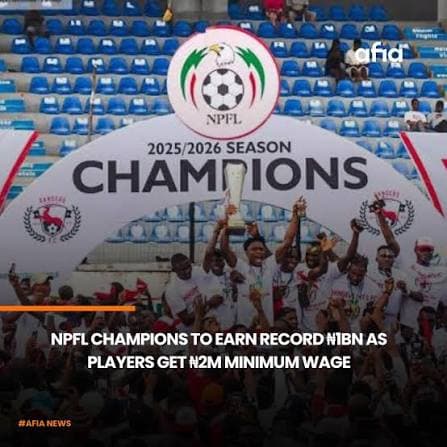
The 2026/27 NPFL season will be a historic one as the champion will walk away with ₦1 billion, the highest award in the history of Nigerian domestic football. The extra money could also tempt clubs to improve the game and professionalism. However, doubts remain concerning the substance of the proposed reforms including finance, implementation deadlines and how the NPFL will ensure compliance with new professional standards.
The NPFL is at a crossroad, and there is room for deliberate and consistent growth and development. If the league can handle the issues of governance, financial independence and fan participation, it can be the example in African football. The attention displayed by renowned Nigerians like Ibrahim Gusau Bukola Olopade towards modernising sports administration in Nigeria is a promising omen for the NPFL future.